
Posture is not only a focus of my fitness, but of my lifestyle in general. This is not because I love working on it but because it is a Herculean task to reverse the cumulative effects of gravity and environmental stressors.
As a disclaimer, perfect posture is a myth and most people have perfectly healthy postures. This is not something to make yourself neurotic about.
I, however, have both bad posture and a touch of neurosis, so I have spent a lot of time thinking about this. If you’re interested in improving this aspect of your health, and are willing to focus on it over the course of days, months, and years, then I hope this post will help. I intend for it to cover things that have helped me but are not necessarily obvious in the mainstream, so take it with a grain of salt. All bodies are different.
Content
Does this matter?
Yes.
Posture is an unstable system, meaning that as it falls out of alignment the deviation has a tendency to become amplified over time.
In fact, the human body is described in some physiology research as an inverted pendulum, which is a classic example of an unstable system. So, if by this logic the structure is slowly collapsing and becoming increasingly costly to fix, it is reasonable to spend energy on its maintenance.

Effects of Bad Posture
Physical
It is possible that your posture is affecting your body more than you realize. Let’s use me as an example and start from bottom to top, because that’s how these issues tend to emanate.
I have tightness in my right hip, specifically in my psoas muscle, which slightly affects my gait. Abnormal gait can lead to its own universe of progressive decline that won’t be covered in this article.
It can be difficult to rotate about my torso symmetrically because the psoas connects to the spine and because its dysfunction has made other muscles in the area tighter.
My hip is pulled into anterior, or forward, tilt because of this tightness. This means my lumbar spine is being pulled down at the aforementioned connection point. My body’s power efficiency is reduced because of this misalignment and the resulting lack of structural rigidity (more on this later).
Because my neck doesn’t sit optimally above my shoulders, I have had headaches from neck strain. I have very limited neck mobility in every axis. Due to this limited mobility I am unable to strengthen my neck properly, making me more vulnerable to head and neck injuries. I likely have crossbite malocclusion, a malalignment in my jaw, as a result of my posture. This affects my teeth as well. I have upper back pain and tightness, partially from supporting my massive head in its forward position while I type this. What a mess! The good news is it’s all connected (not the massive head, that’s a personal problem).
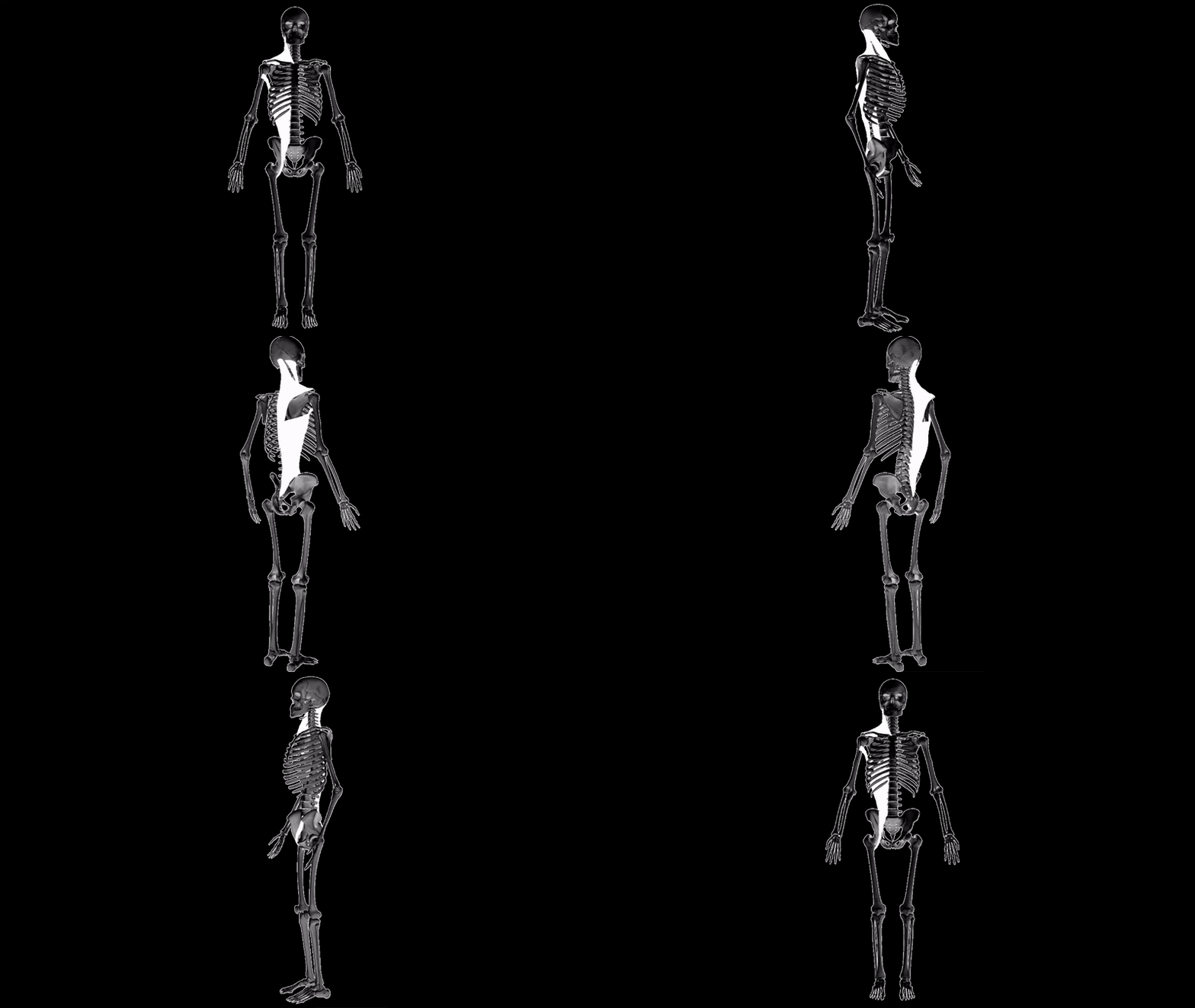
Fun illusion: If you stare deep into the paragraph above, you may be able to reverse his spin.
Bear in mind this is just what I’ve explicitly noticed in my own body. There are likely some effects that I haven’t noticed, and there are more possible effects of poor posture that affect others and not me. Every body is different.
Notice how my tightness has concentrated on one side of my body. I am slowly collapsing to this side, probably as a result of the psoas tightness, which may have originally resulted from a hip injury. However, the injury likely resulted from conditions in my life, like chronic sitting, that made me more vulnerable to injury in the first place. Either way, I’m here now.
Power Generation

The simulation shows, metaphorically, how a lack of structural integrity in the body can reduce power output. For example, if your head and neck sit too far in front of your spine ( sometimes called “Tech Neck” or cervical kyphosis), you may experience inefficiency in translating force from the ground through the body in running or jumping.
The simulation also hints at how a lack of coordinated rigidity can lead to injury along these structural fissures. Postural deficiencies can translate forces that are normally spread out across a kinetic chain into regions that are poorly equipped to bear such load. These forces can come in the form of repetitive movements like distance running, explosive movements like jumping in basketball, or load bearing activities such as lifting weights or existing on a planet with gravity.
Psychological
While the physical effects of bad posture can be severe, the more insidious effects may be psychological. I have seen how anxiety can manifest itself in the body of a person, but admittedly I had no idea how extensive the relationship between mind and the physical body could be. Here is a quick summary of what I found, with my sources included at the bottom of the section. They all hint at a theoretical feedback loop between your body’s posture and your psychological health.
In recent research it was found that people placed in a slumped posture showed less persistence in challenging tasks compared to when being in an upright posture, and that the effect persisted after they were no longer slumped.
Further, posture has influence over energy, leading some researchers to posit that chronic slouching over phones or computers could lead to increases in depression. People who suffer from depressive symptoms may also be more likely to develop spinal abnormalities.
Being in a slouched or upright posture may also influence self-perceived abilities, like leadership aptitude. So posture may not only be an indication of an emotional state, but may actually influence emotions and other areas of cognition.
Finally, your posture may influence how people perceive you. This is another potential avenue for a negative feedback loop, though this one external. Observers perceive people in slumped postures as being depressed. Even the observation of a person’s gait can reliably communicate that person’s emotional state.
From this set of examples, and many more that are not included or not yet discovered, the interrelationship between mind and body is legitimate and should be taken seriously.
Click Here For Posture Research Findings
- This study found that walking posture significantly affects energy levels, with slouched walking decreasing energy (especially in depression-prone individuals) and upright skipping increasing energy, suggesting body posture interventions could complement traditional depression treatments.
- Peper, Erik; Lin, I-Mei . (2012). Increase or Decrease Depression: How Body Postures Influence Your Energy Level. Biofeedback, 40(3), 125–130. doi:10.5298/1081-5937-40.3.01
- This study found that participants who maintained an upright, positive posture were more likely to choose seats closer to the head of a table (indicating higher self-perceived leadership) compared to those who maintained a slouched, negative posture, demonstrating how physical posture can influence cognitive perceptions of one’s own leadership abilities.
- Arnette, Sarah L., and Terry F. Pettijohn Ii. “The effects of posture on self-perceived leadership.” International Journal of Business and Social Science 3.14 (2012): 8-13.
- This research study found that specific body posture and movement features, including head position and arm movements, play a crucial role in both expressing and perceiving emotions during walking, with upright postures associated with positive emotions and slouched postures with negative emotions, demonstrating that the body effectively communicates emotional states through physical features that can be systematically identified and analyzed.
- Roether, C. L., Omlor, L., Christensen, A., & Giese, M. A. (2009). Critical features for the perception of emotion from gait. Journal of Vision, 9(6):15, 1–32, http://journalofvision.org/9/6/15/, doi:10.1167/9.6.15.
- A systematic review of research from 2000-2022 examining the relationship between posture and depression found, across 23 high-quality studies, that depressed individuals consistently demonstrate more slumped posture and spinal abnormalities, with this relationship being particularly pronounced in adolescent girls.
- Dehcheshmeh, T. F., Majelan, A. S., & Maleki, B. (2023). Correlation between depression and posture (a systematic review). Current Psychology: A Journal for Diverse Perspectives on Diverse Psychological Issues. Advance online publication. https://doi.org/10.1007/s12144-023-04630-0
How to Identify
Muscular Imbalances
The first step to solving a problem is to identify it; you must determine exactly where your postural deficiencies are located.
This is not easy to do because the body is a tangled marionette of muscle and ligament connections. As a consequence it is sometimes difficult to discern the source of a malfunction because it can exist distantly from where pain is felt.
For posture issues, pain might not be felt at all. This is because, like a river carving out the grand canyon, your environment has shaped you slowly but relentlessly over time. You have now been morphed into the shape of that environment. It is painless and imperceptible.
Some issues may be obvious to your eye when you look in the mirror or photos: uneven shoulders, bowed knees, tilted hips, or forward head position.
Others may not be so obvious visually. To find these hidden problems yourself requires that you be very attentive to your body which is a great skill in general.
I recommend activities with slow, controlled, intentional movements like Yoga or Tai-chi; pay attention to limitations in movement, asymmetries in movement abilities, or tightness and discomfort in what should be an achievable range of motion. Even simpler than Yoga are common range of motion assessments like the Thomas Test. Here is a PDF of functional movement screening, which may allow you to evaluate your own limitations.
I find that muscles that are out of their proper length-tension relationship are tender to the touch. This means that if you apply physical pressure, like a massage, to the muscle you may notice a significant soreness. If the symmetrical muscle on the other side of the body does not produce the same amount of discomfort when equivalent pressure is applied, then there is an imbalance. In my case, if I run my thumb down my sternocleidomastoid muscle, behind the ear at the base of the skull to the collarbone, my right side is much more sensitive particularly at the insertion points.
You could also seek professional help to determine exactly where an issue is located. You could go to a physical therapist (physiotherapist) or chiropractor, or even an orthopedic doctor or podiatrist depending on the source and severity of the issue. Even a massage therapist can help you notice areas in your body where unhealthy tightness has built up.
Often a “keystone” problem will exist which is especially important to address. This keystone should be remedied before moving on to other problem areas, because it is the ultimate source of the other problem areas. To reiterate, physiological disorders tend to move up the kinetic chain— from low to high, foot to head. Therefore, my psoas dysfunction in my hip should be my focus before I look to fix anything else such as chronic neck tightness.
Lifestyle Contributors
As stated previously, the body is formed by its environment like a river forms a canyon. Your lifestyle contributes significantly to your posture, and so to change your posture may require a change of environment or lifestyle habits.
So I have determined that my hip tightness is my keystone problem, the next step would be to find out what may be contributing to its dysfunction or preventing it from healing appropriately.
In my case, I suffered a hip injury in that right psoas several years ago. After a muscular injury, the length of muscle tissue tends to decrease in the healing process. This shortening increases the resting tightness of the muscle, which can put painful strain on other joints and create the conditions for posture changes.
I spend much of my day seated and at a computer, it has taken a toll on my body. In a seated position, the hip flexor muscles (which includes the psoas) are resting at a shortened length. Because of the process of adaptive shortening, the muscles become shorter and tighter while resting in this contracted position. In conjunction with the injury I sustained, this lifestyle behavior has prevented me from healing fully and has kept my right psoas in an unnaturally shortened position.
I then go to bed, and like many people enjoy sleeping on my side. Here again I bring my legs up and my hips are in a shortened position. So between my waking and sleeping hours I am spending over three quarters of my day with my hips in this contracted shortened position. Also, while sleeping my shoulders are compressed over one another maybe leading to further rounding. In fact, my sleeping posture looks a lot like my sitting posture. Perhaps I can only sleep comfortably in this position of least resistance-the posture my body has become used to over thousands of hours-further accelerating the problem.
Bodyweight can change your posture by shifting your center of gravity. I say bodyweight because, for our purposes in the discussion of posture, the effects of equivalent pounds of muscle and fat are similar; they both add weight to your frame, adding downward pressure from the force of gravity. A shift in your body’s center of gravity puts muscles and joints that are optimized to face gravity in a certain axis, into the unnatural position of facing them in a shifted axis. Also, having a significant amount of muscle tissue comes with the responsibility of stretching more to maintain the health of the tissue. The more muscle a person has, the greater the likelihood of tightness.
Aspects of posture may be genetic, which adds another wrinkle of complexity. I have been told I stand and walk like older generations of my family. As with hereditary diseases, observing your elders can give valuable insights into your future. While certain traits may be inevitable it is still worth trying your best to take these insights and make prudent decisions.
How To Address
Fitness
Stretching
Dedicated stretching is important to keep muscles in their proper length and tension relationship. All people can benefit from stretching.
Generally, people do not stretch their muscles for long enough to gain flexibility and mobility. I think the confusion comes because people often use the term “stretching” to refer to activity to warm up and get muscles ready before training. This form of warm-up “stretching” is actually better handled by ballistic movements, and so is better referred to as a dynamic warm-up. Stretching for the sake of increasing flexibility is not ideal as a pre-workout activity because by stretching the tissue the power and explosive capability is reduced.
Stretching for the sake of flexibility is worth doing in dedicated sessions, perhaps after a workout, on off days, or even in moments of downtime— it doesn’t take much to stretch your hamstrings while waiting for the microwave to finish.
A stretch should be held for a minimum of thirty seconds to be effective. This duration is required because it allows Golgi tendon organs (sensory receptors within the muscle tendons) to trigger autogenic inhibition (a reflex that relaxes the muscle after sustained tension). This means that the tissue structurally relaxes as a response to the prolonged stretch allowing for deeper and more effective stretching. Try to breath slowly and be calm. Stretching properly can sometimes be very intense, but grimacing with tension will only work against the goal.
For the most part, stretching should be symmetrical on both sides of the body except for when targeting areas where you have recognized chronic tightness. A chronically tight muscle should be stretched with priority, and stretching its contralateral counterpart -the symmetrical equivalent on the other side of the body- can be deferred until parity is reached.
A slightly more advanced strategy is to focus on stretching while lifting. In practice this would look like using a safe amount of weight to work a muscle through its entire range of motion under load. This type of loaded stretch can have hypertrophic (muscle building) benefits, and creates a two-for-one time efficiency. I recommend reading Legendary Flexibility by Jujimufu for more on this topic, and for some great insights into stretching in general.
I am not going to list out effective stretches, there are too many to cover and it is easy to find good demos online. The principle will remain the same: safely position a muscle in its elongated state, relax as much as possible, and gently fight for a deeper stretch. Stretch every direction a joint naturally moves in. Areas for special focus should be the hips and shoulders. This is because they are both ball-in-socket joints that connect our limbs to the torso, so they need to be flexible in essentially every direction, and they connect to very large prime-mover muscles that are prone to tightness. The neck is also important to stretch safely because it too is capable of movement in all three planes of motion.
Balance
Balance training can be a good way to both discover and address posture problems. If you are unable to hold a simple single leg balance exercise consistently for at least 30 seconds, this is a sign of deficiency and an area for improvement.
Struggling to stay balanced on one leg can mean a weak core, neurological problems affecting proprioception, or tight and restricted mobility.
I find that if I am standing in line, or standing in place for prolonged periods of time subtly shifting my weight and balancing from one foot to another is actually more comfortable than standing on both feet. It forces you to engage your glutes and core and align your body with gravity.
Core
The core can be difficult to train properly and is often neglected by athletes. That’s unfortunate because it is foundational for power generation. A healthy core is one which can become rigid, flexible, and sometimes both simultaneously.
To be “both simultaneously” means that if an athlete twists their torso to either side, they should sacrifice as little rigidity as possible to achieve the range of motion.
It appears that most athletes train their abdomen mostly in the sagittal plane (forward and backward linear movements such as planks and dozens of variations of crunches). Movements like this are useful, but do not train the entire range of the abdomen. The torso also twists (in the transverse plane), and tilts (in the frontal plane). To twist and tilt requires that some parts of the abdomen stretch and others contract. For athletic endeavors, to be able to be rigid in these position is also critical.
I have noticed myself completely loosening my abs to twist to my left side, requiring my ribs to flare up to gain the extra mobility. This is a structural problem where I can’t be both flexible and rigid at the same time. I evidently need to work on more exercises that focus on transversal, twisting movements. Sometimes I will stand with my feet facing one wall at shoulder width, and twist my torso to the perpendicular wall and hold the position for about 30 seconds while flexing my abdomen. This creates a simple isometric exercise to address my specific limitation. There are limitless unnamed custom exercises like this.
Here are two simple workouts that focus in the sagittal plane, but which I think are excellent for posture support.
Hanging Leg Raise
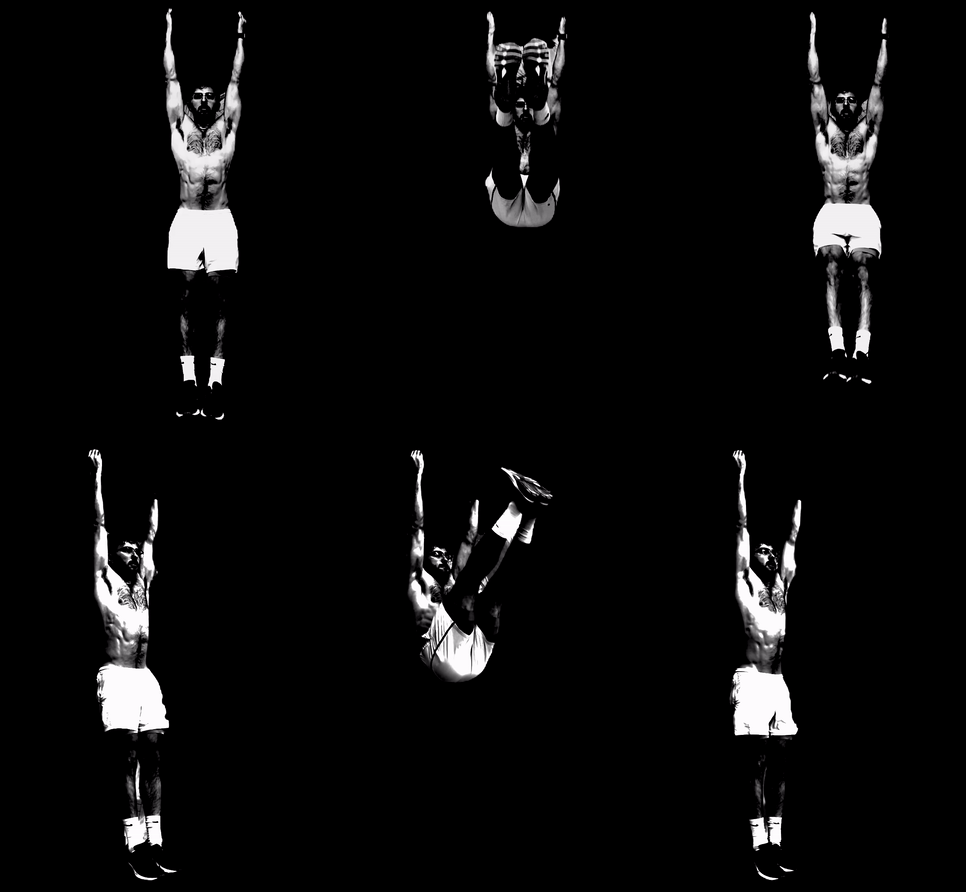
Leg raises are practical and popular, but I fear that they are often done ineffectively; too often leg raises are turned into a hip flexor workout. A leg raise, as a core workout, requires the intentional flexing of the abdominal sheet.
In the demo above, notice how after my legs are brought up to parallel with the ground, I continue to raise them by arching my back slightly.
Plank
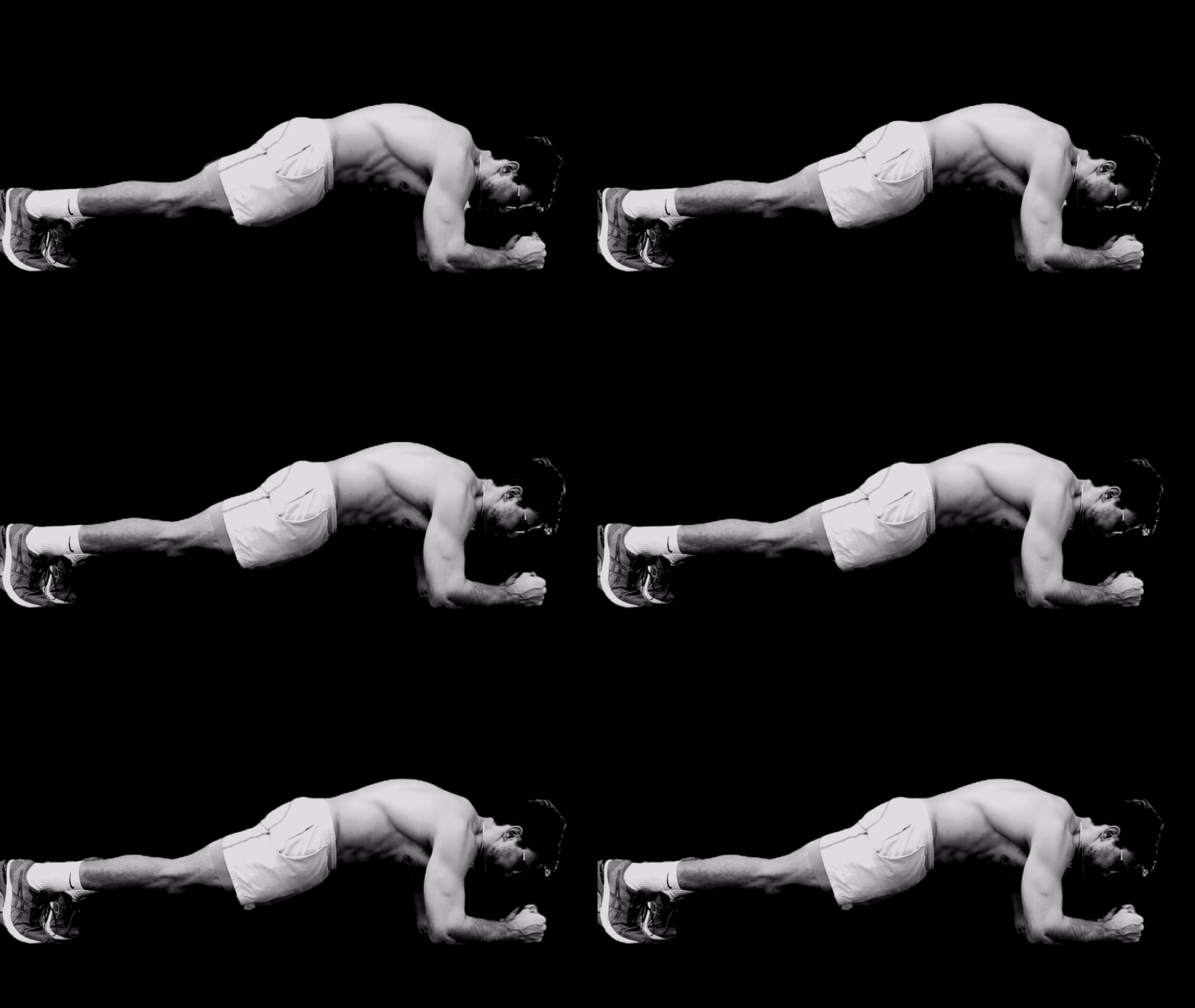
The plank is also a great posture workout. It is simple and achievable for most people. The only special instruction I would give would be to, again, actively squeeze your abdomen while in the plank position. Too often people will passively rest in the plank, figuring that to be in the position at all is enough. It is an ab exercise, so emphasizing the contraction benefits the workout.
Also, while fatigued in the plank it is better to be biased “up” rather than down. I like to say that you should imagine that you’re a suspension bridge. Collapsing down will put pressure on the lower back, and reduce the effectiveness of the workout. “Collapsing” up allows for the safe continuation of the exercise past the point of fatigue and allows for focused contraction of the abdomen.
Lifestyle Changes
The Most Important Thing: Standing, Sitting, and Walking
This might be the most important subsection for addressing postural problems. To get good posture you must stand, sit, and walk with good posture! You must enact it, and there is no way around it. This is a critical concept for training in general; the principle of specificity states that, in order to improve an aspect of physical fitness, a person must specifically emphasize that aspect in training. The body adapts to its environment, for better or worse. Use that to your advantage.
To develop good standing posture I recommend intentional practice in front of a mirror, particularly one that can reflect at multiple angles (like at the corner of a mirrored wall). Think of this as an exercise to be done to strengthen the muscles and neuromuscular signals that control the posture so that it can be maintained in a relaxed state. Some general cues:
- Stand tall
- Retract your shoulder blades back and down
- Raise your chest proud
- Draw the crown of your head to the ceiling
In this position you should be able to flex your abdomen tight, and squeeze your glutes. A lot to think about, perhaps, but try to remain calm and breath normally. Try to maintain this posture, flexing and feeling the muscles that need to activate, for 30-60 second bursts or longer if able.
I like to hold my hands behind my back, like a butler, because I feel it helps focus on keeping my front upright. Or, slightly more challenging, extending my hands as far as possible towards the ceiling and actively striving for more stretch while keeping the core tight. I also find that holding heavy weights to your side, like in a farmers carry, can have posture benefits.
Walking builds on this foundation, transferring the principles of standing posture into a natural movement. Walking is already an excellent activity with great fat burning and brain health benefits. By adding a postural focus you can increase the intensity of the exercise slightly and gain valuable posture “practice”.
I don’t think it’s worth writing much about ideal sitting posture. The ideal is to minimize chair sitting altogether, because it is inherently an unhealthy posture. I find sitting in what physiologists consider good “sitting posture” to be unsustainable and distracting. If I am sitting I intend to do work that requires my focus which makes maintaining the posture counterproductive. For non-intensive work like reading, I will sometimes walk and read at the same time, or at very least stand. For moderately intensive intellectual work that will require more than an hour of effort, I try to position myself in a reclined chairs, with my feet raised and head supported. With adequate head support you could also practice chin tucks into the head rest. Being in an upright seated position should be reserved for work that requires intense focus, and should be broken up with standing or walking breaks if possible.
As I finished editing this article, a relevant twin study was just published by the CU Boulder and UC Riverside with over 1000 participants. They observed that participants averaged 9 hours of daily sitting, with some averaging 16 hours.
Although this does not have to do explicitly with posture, the researchers concluded that the more time spent sitting, the higher the biological aging markers. Sitting for over 8.5 hours a day was associated with increased cardiovascular and metabolic disease risk. These health risks are serious, underscoring the importance of avoiding prolonged sitting.
The effects of prolonged sitting could not be adequately canceled by the minimum exercise guidelines (20 minutes a day). However, vigorous activity (over 30 minutes a day) seemed to have helped offset or even reverse many of the most harmful effects, such as by improving BMI or cholesterol levels. I’ve included the citation to this study below and I recommend reviewing it yourself if you have the time.
Research on Physical Activity and Aging
- A twin study examining biomarkers of early aging found significant associations between sedentary behavior, physical activity levels, and aging markers, suggesting lifestyle factors play an important role in biological aging processes.
- Bruellman, R., Pahlen, S., Ellingson, J. M., Corley, R. P., Wadsworth, S. J., & Reynolds, C. A. (2024). A twin-driven analysis on early aging biomarkers and associations with sitting-time and physical activity. PLOS ONE. DOI: 10.1371/journal.pone.0308660
Inflammation, Diet, and Hydration
Inflammation is extremely underappreciated in the mainstream as a source of discomfort and ailment. I only noticed the effects, or rather their absence, while doing a prolonged elimination diet in the form of Whole 30. It made me realize that many Americans will go their entire lives consuming inflammatory foods completely unaware of the consequences; it is all they’ve ever known.
One thing I noticed while explicitly trying to reduce my intake of inflammatory foods is that I could feel muscles functioning more effectively. The resulting sense of freedom, or lightness, is actually what made me notice the absence of inflammation in the first place. I could feel that I was able to get a better contraction from muscles allowing me to engage others that have become undeveloped by neglect. Not intentional neglect, but once a tightness begins, let’s say as a response to an injury, the movement pattern becomes restricted. Once the movement pattern becomes restricted the neural signals to the region become atrophied creating a negative feedback loop and creating another barrier to repair.
I could feel that I was able to intentionally squeeze muscles in my upper back more effectively, particularly splenius capitis and the upper trapezius. Engaging these relatively small muscles is more difficult for me than squatting hundreds of pounds, so any help is appreciated. This should emphasize the difficulty that dedicated posture work involves. To engage these small and weak muscles is surprisingly challenging.
So how do you avoid inflammation? Diet plays a critical role, as it does in many things (you are what you eat). I recommend reading Eat, Drink, and Be Healthy: The Harvard Medical School Guide to Healthy Eating. The elimination diet opened my eyes to the effects of inflammation, but an elimination diet is unsustainable. Reading this book gave me a much better understanding of the specific triggers of general inflammation. To sum it up very quickly, a high intake of sugars, refined carbohydrates (white bread, white rice), processed foods, alcohol (and other toxins), and trans and saturated fats can be inflammatory. Alternatively, many vegetables, fruits, and foods that contain healthy Omega-3 fatty acids (like salmon and flaxseed) and monounsaturated fats (like olive oil and avocados) can help reduce inflammation.
There are many other pro and anti inflammatory factors out there that I will not cover. Learning more about this will benefit your life, as it has mine.
Click Here For Inflammation Research Findings
- While acute inflammation is essential for proper muscle healing through coordinated cellular responses, chronic inflammation can impair recovery, suggesting that anti-inflammatory treatments should be prescribed based on careful evaluation of whether the condition is acute or chronic and whether inflammation is local or systemic.
- Elise Duchesne, Sébastien S. Dufresne, Nicolas A. Dumont, Impact of Inflammation and Anti-inflammatory Modalities on Skeletal Muscle Healing: From Fundamental Research to the Clinic, Physical Therapy, Volume 97, Issue 8, August 2017, Pages 807–817, https://doi.org/10.1093/ptj/pzx056
- Inflammatory mediators play complex roles in muscle health and disease, with specific cytokines and myokines orchestrating both beneficial and detrimental effects on muscle maintenance and regeneration, particularly in chronic inflammatory conditions like COPD, rheumatoid arthritis, and inflammatory myopathies.
- Londhe P, Guttridge DC. Inflammation induced loss of skeletal muscle. Bone. 2015 Nov;80:131-142. doi: 10.1016/j.bone.2015.03.015. PMID: 26453502; PMCID: PMC4600538.
- While acute inflammation is essential for proper muscle regeneration through controlled immune cell recruitment and cytokine signaling, excessive or chronic inflammation can impair recovery and promote muscle wasting, with certain individuals being more susceptible to this detrimental inflammatory response.
- Howard EE, Pasiakos SM, Blesso CN, Fussell MA and Rodriguez NR (2020) Divergent Roles of Inflammation in Skeletal Muscle Recovery From Injury. Front. Physiol. 11:87. doi: 10.3389/fphys.2020.00087
- The Western diet, characterized by high intake of processed foods, refined grains, and added sugars, has widespread negative effects on human health including increased inflammation, disrupted metabolism, and higher disease risks, leading to significant healthcare costs globally, but can be mitigated through dietary and lifestyle modifications.
- Clemente-Suárez, V. J., Beltrán-Velasco, A. I., Redondo-Flórez, L., Martín-Rodríguez, A., & Tornero-Aguilera, J. F. (2023). Global Impacts of Western Diet and Its Effects on Metabolism and Health: A Narrative Review. Nutrients, 15(12), 2749.
Hydration also plays an important role in muscle health, similar to that of inflammation. It is kind of a trope to mention that water makes up about 60% of our body’s mass, but recognizing this at the macro level hints at the importance of water at the cellular level. In fact, water is especially important to muscle tissue making up about 77% of its mass.
It is too extensive to cover all the effects of dehydration on muscle functioning. As it relates to posture dehydration increases muscle stiffness, impairs muscle contraction, and worsens fatigue. It also compromises the structural integrity of the muscle, connective, and joint tissue.
I try to drink around 128 to 192 ounces of water a day (1 to 1.5 gallons). I am physically very active and sweat a lot, and different bodies have different water requirements, so this may not be representative of what is typical. The point is, I intentionally focus on drinking a significant amount of high quality filtered water every day, and many people would benefit from doing the same.
Click Here for Research on Hydration and Posture
- The study demonstrates that hydration significantly impacts intervertebral disk mechanics, with higher osmotic loading (lower hydration) increasing disk stiffness due to tissue compaction, while the nucleus pulposus and annulus fibrosus regions showed different swelling behaviors depending on their composition and structure.
- Bezci, Semih E.; Nandy, Aditya; O’Connell, Grace D. . (2015). Effect of Hydration on Healthy Intervertebral Disk Mechanical Stiffness. Journal of Biomechanical Engineering, 137(10), 101007–.doi:10.1115/1.4031416
- This study demonstrates that proper hydration during exercise helps maintain postural stability while dehydration and exhaustion impair balance control, with performance ranked from best to worst being: control, hydrated exercise, dehydrated exercise, and maximal exertion.
- Gauchard GC, Gangloff P, Vouriot A, Mallié JP, Perrin PP. Effects of exercise-induced fatigue with and without hydration on static postural control in adult human subjects. Int J Neurosci. 2002 Oct;112(10):1191-206. doi: 10.1080/00207450290026157. PMID: 12587522.
Sauna
I enjoy using a dry sauna for about 20 minutes two times a week- Friday and Wednesday evening after a workout.
There is no consensus on what time of day is optimal for use, and people may respond differently. I personally have a strong reaction to the heat, which increases my heart rate and rapidly dehydrates me from sweat. Following this intensity, I find myself in an exceedingly relaxed state, which aids in sleep (as long as I remain properly hydrated). The stress reducing effect of the sauna facilitates our postural focus, since a lot of postural deficiencies are caused from stress. I find the sauna (at approximately 150°F) so intense that I believe it would be counterproductive to me if I used it more frequently per week. It is an important skill to be able to listen to your body.
In fact, the sauna can be detrimental to your body if not used intelligently. The intensity can release stress hormones which undermine your health and will ultimately work against our goals.
While in the sauna, I spend the first half of time standing with intentionally good posture: chin level, head high, shoulders back and down, abs contracted, and pelvis engaged. Despite this activation I try to stay as calm as possible. After 10 minutes this becomes exhausting so I will sit (hopefully with “good sitting posture”). I will then spend the remaining time lightly stretching as many joints as I can.
Beyond the relaxation and posture benefits I use the sauna for its theoretical benefit to hypertrophy and well researched benefit to circulation. I will cover the other uses at a later date.
Click Here For Sauna Research Findings
- Heat combined with stretching consistently produces better improvements in range of motion than stretching alone, as demonstrated through a systematic review of 12 studies involving 352 healthy participants using various heating methods (ultrasound, shortwave diathermy, and hot packs).
- Nakano, J., Yamabayashi, C., Scott, A., & Reid, W. D. (2012). The effect of heat applied with stretch to increase range of motion: A systematic review. Physical Therapy in Sport, 13(3), 180-188
- Regular Finnish sauna bathing (80-100°C, 10-20% humidity) offers numerous health benefits including cardiovascular and neurological improvements, with specific evidence showing pain relief and symptom improvement in musculoskeletal conditions such as osteoarthritis, rheumatoid arthritis, and fibromyalgia, though the authors note more research is needed to fully understand the mechanisms behind these benefits.
- Laukkanen, J. A., Laukkanen, T., & Kunutsor, S. K. (2018). Cardiovascular and other health benefits of sauna bathing: a review of the evidence. Mayo Clinic Proceedings, 93(8), 1111-1121.
- Based on the review, sauna bathing appears to reduce systemic inflammation through multiple pathways, including reduced C-reactive protein levels, improved blood flow, enhanced nitric oxide bioavailability, and altered immune responses, suggesting it may be an effective intervention for inflammatory conditions.
- Hussain, J., & Cohen, M. (2018). Clinical Effects of Regular Dry Sauna Bathing: A Systematic Review. Evidence-Based Complementary and Alternative Medicine, 2018, 1857413. doi:10.1155/2018/1857413
- This global survey of 482 sauna users reveals that regular sauna bathing is perceived as a safe and effective tool for relaxation, sleep improvement, and mental well-being, with moderate use (5-15 times monthly) associated with the best mental health outcomes.
- Hussain JN, Greaves RF, Cohen MM. A hot topic for health: Results of the Global Sauna Survey. Complement Ther Med. 2019 Jun;44:223-234. doi: 10.1016/j.ctim.2019.03.012. Epub 2019 Apr 24. PMID: 31126560.
Sleep Position
As mentioned above, it is possible that sleep position can influence waking posture. There is not a lot of research on this relationship, but the theory behind it is reasonable.
I make an effort to sleep flat on my back without a pillow because this position keeps my spine in a neutral alignment. If I have trouble falling asleep or if I wake up after a few hours, I will usually flip on to my side which I find more comfortable. While on my side I will use my pillow for my head, keep a pillow between my knees so that my legs don’t cross over themselves, and a pillow by my chest so that my shoulders to not collapse over themselves. The only problem with this is that my hip flexors are still in the shortened length, but otherwise my spine is in line, my shoulders are stacked and not slouched, and my hips are in line and not tilted awkwardly.
More information along these same lines can be found in this article by the University of Rochester Medical Center.
Sleeping on your stomach should probably be avoided.
Controversy and Conclusion
Several weeks ago my algorithm recommended me the book Slouch by historian and sociologist Beth Linker. I thought, “great a book to help me learn more about my posture”. Instead the book claimed that the current obsession with posture has sociological roots based in fear and pseudoscientific beliefs based on evolution. While some of these claims are valid, I’d respond that society is obsessed with posture because it matters and is potentially getting worse.
In fairness, posture research does face many scientific challenges. As already mentioned, there is no such thing as perfect posture which makes it difficult to analyze scientifically. Further, the relationship between posture and neck or back pain is spurious and inconclusive so far.
One of my favorite fitness experts Dr. Mike Israetel is convinced that posture focus in the fitness world is overblown . He says in a youtube video,
Posture is the single biggest cesspool ever. Posture is mostly genetic it has almost nothing to do with muscle strength it’s just how you usually sit nobody has bad posture because their pecs are too strong and their back is too weak.
He makes the argument that muscle imbalances do not make sense physiologically because in the example of tight pectoral muscles the back muscles would be in a constant eccentric load eliciting a hypertrophic response which would eventually pull the system back into equilibrium. I disagree with this theory because we already know that muscles can exist in a tightened state for sustained periods of time. His argument is the opposite of the one I made; he claims posture is a stable system that falls into equilibrium, I see it as an unstable system that falls out of equilibrium and requires effort to fix.
Either way, I think this is a subject that deserves more research in the scientific and fitness communities and I look forward to learning more about it as the field develops. In the interim I will continue to experiment on my own in the pursuit of long term healthy posture.
I encourage you to do the same.
Summary
- Poor posture can trigger a cascade of physical and psychological effects, from chronic pain and reduced athletic performance to decreased confidence and mood.
- The bipedal body acts like an inverted pendulum so postural misalignments tend to amplify over time, leading to compensatory patterns throughout the body.
- While there’s no such thing as “perfect posture,” research indicates that prolonged postural stress can affect everything from power generation in sports to how others perceive us.
- Addressing postural issues typically requires a comprehensive approach combining targeted exercise, mindful movement patterns, and lifestyle modifications – including attention to diet, sleep position, and daily habits.
- However, the science of posture remains contentious, with some experts arguing its importance has been overstated and others emphasizing its fundamental role in health and performance. This ongoing debate highlights the need for more rigorous research while acknowledging that individual bodies respond differently to postural interventions.
 Rittenryl