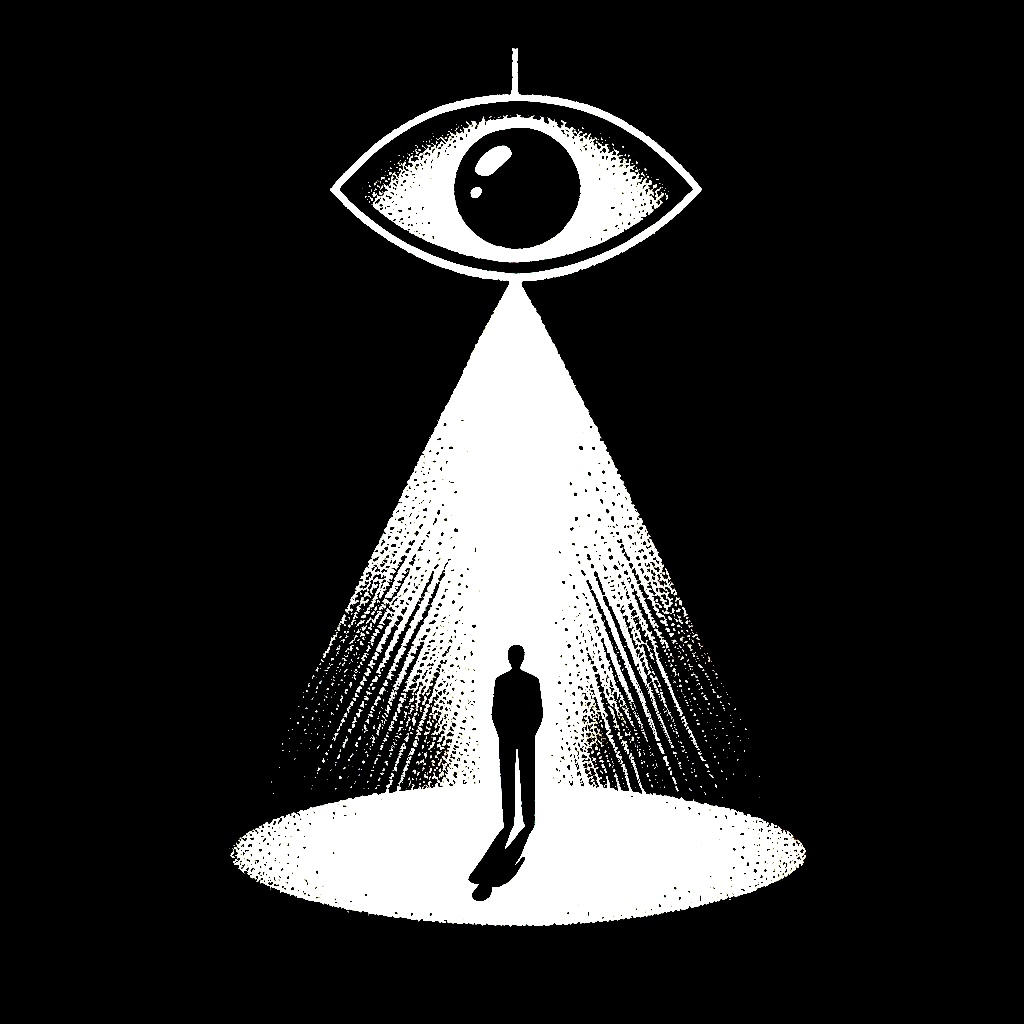
If you are reading this, you are being surveilled.
The author of this paper has access to when you visited this page, which country you visited from, and the media platform that brought you here.
Does that make you uncomfortable? Perhaps not.
Unfortunately for you, this is likely the minimum surveillance that you are subject to. Some of this monitoring you may be distantly aware of. It is safely assumed that Instagram knows that you clicked this link, Google tracks what you searched for, and WordPress keeps track of your activity beyond what I have access to. Any node along the information path of the internet has potential access to a user’s data traffic.
Does that make you uncomfortable? It should, if you think enough about it.
However, most insidiously, we are both under deeper surveillance that we are completely unaware of. This unknown surveillance is from both private and public interests, and the extent of the capabilities can only be speculated about by leaks and conjecture.
Here is a telling example, both extreme and worryingly obscure.
In August 2013, it was reported in the Wall Street Journal that National Security Agency officers had, “on several occasions… channeled their agency’s enormous eavesdropping power to spy on love interests.” Apparently, this practice is common enough that it had been dubbed “LOVEINT”, a playful spycraft label, derivative of “SIGNINT”, which means signals intelligence. According to the government, which leaked the story to get ahead of public fallout, the abuses were “very rare”. However, that it happened at all is indicative of how loose the agency’s control is of such powerful tools. In fact, in June 2013 Edward Snowden, who worked as a third party contractor to the agency, said to the Guardian:
“I, sitting at my desk, certainly had the authorities to wiretap anyone, from you or your accountant to a federal judge or even the president, if I had a personal email.”
These stories were published over 10 years ago. Records from the past decade are much sparser. Given the proliferation of electronic communication in that time, you could deduce for yourself where this trend has gone.
Privacy has long been relevant in philosophy; it is connected to thought, behavior, and control. We are living in the “information age”, and appropriately this subject is coming into practical relevancy. Now, more than ever, privacy is truly in jeopardy. The implications will be severe.
There is a solution.
The first step is to be aware.
Part 2: A History of Surveillance 3/21/25
 Rittenryl